
Welcome to the world,
Anahita!


What does the name
“Anahita” mean?
Pure and pristine.
Anahita is the name of an ancient Persian goddess of purity, water and fertility. Her story reaches back to pre-Zoroastrian Iran and has been known for more than 2,000 years.
Old Persian cuneiform
Anahita, written in one of history’s oldest writing traditions: Persian cuneiform.
آناهیتا
Her name in Persian script
This is how Anahita is written in Persian today. Persian script flows from right to left, with letters that join together.
Full name
Her full name is Anahita Michiels Azimi. Michiels is Franzi’s last name, and Azimi comes from Mohsen’s last name.
A goddess of waters
Anahita is an ancient Iranian goddess associated with waters and fertility. In Zoroastrian tradition she is a yazata, a divine being worthy of worship. The Avesta celebrates her in the Aban Yasht, a hymn to the waters, as a powerful river that nourishes life.
Her story reaches into traditions older than Zoroastrianism. Scholars connect her with an ancient Indo-Iranian river goddess and a western Iranian goddess whose worship later merged. The details are debated, but water, renewal and purity run through the history of her name.
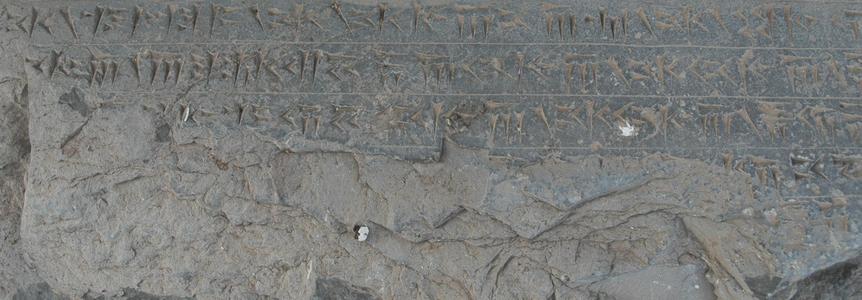
A name carved into history
This stone column-base inscription comes from Susa, in present-day Iran. King Artaxerxes II names Anahita alongside Ahuramazda and Mithra when describing the rebuilding of his audience hall. It dates to his reign in the fourth century BCE, about 2,400 years ago.
Little by little.
Anahita’s weight chart
Follow the cherries.
Photos
A few photographs, kept for family and friends.